In my ongoing study of how we “read” visual language, I find myself increasingly drawn to decks that don’t just use symbols, but entire systematic frameworks. If my previous post was about the “letters”, these four new additions represent the “encyclopedias.”
They challenge the reader to translate dense, often academic or technical information into intuitive insights.
The New Additions
This selection moves the conversation from the stroke of a pen to the architecture of the mind and the machine:
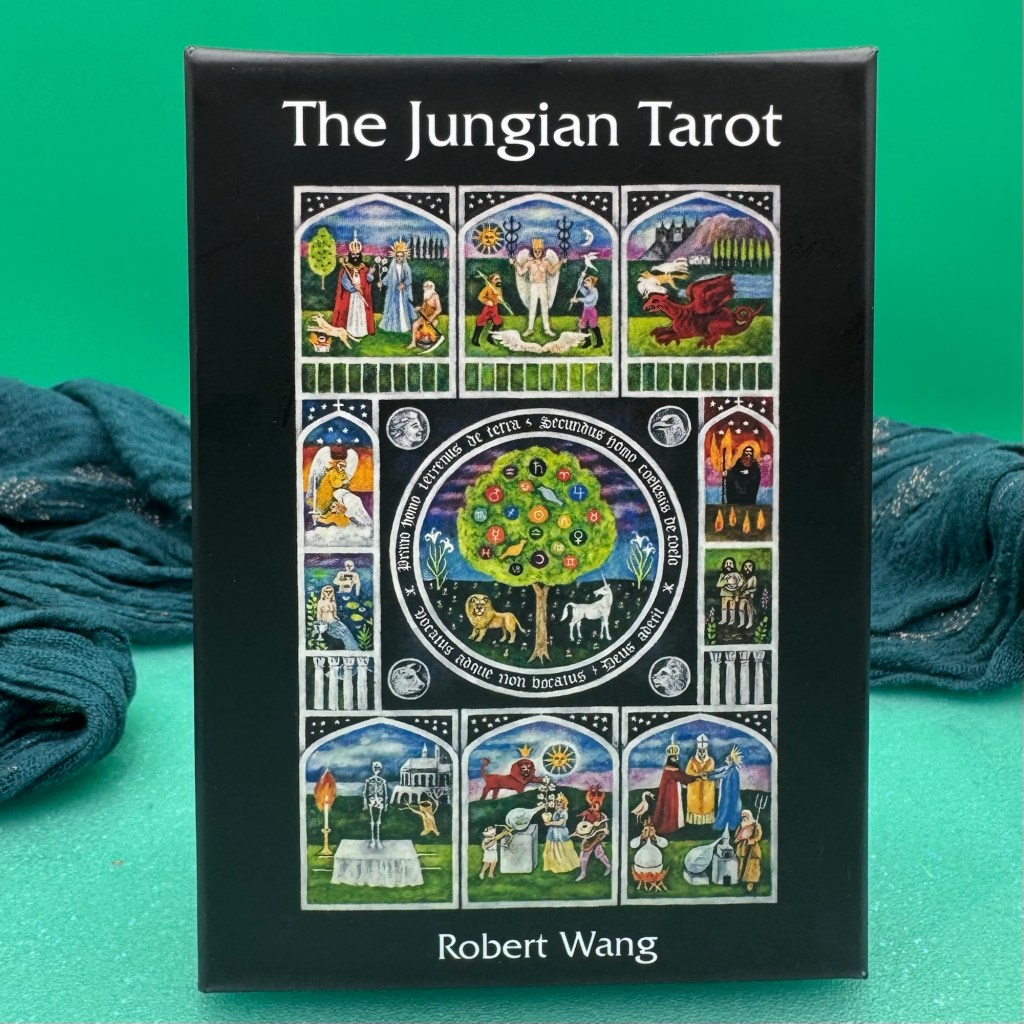
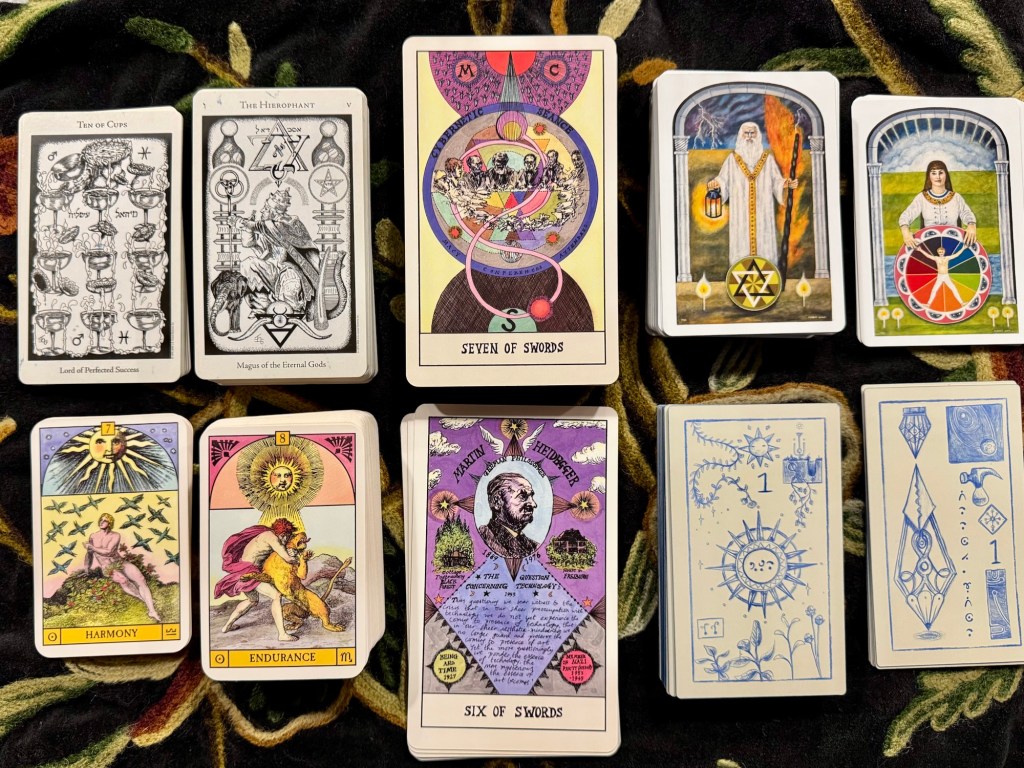
• HEXEN 2.0 Tarot by Suzanne Treister: This is perhaps the ultimate example of “visual information warfare.” It maps the history of the computer and the development of the “scientific-military-industrial complex” onto the Tarot structure. It treats data as a magical system.
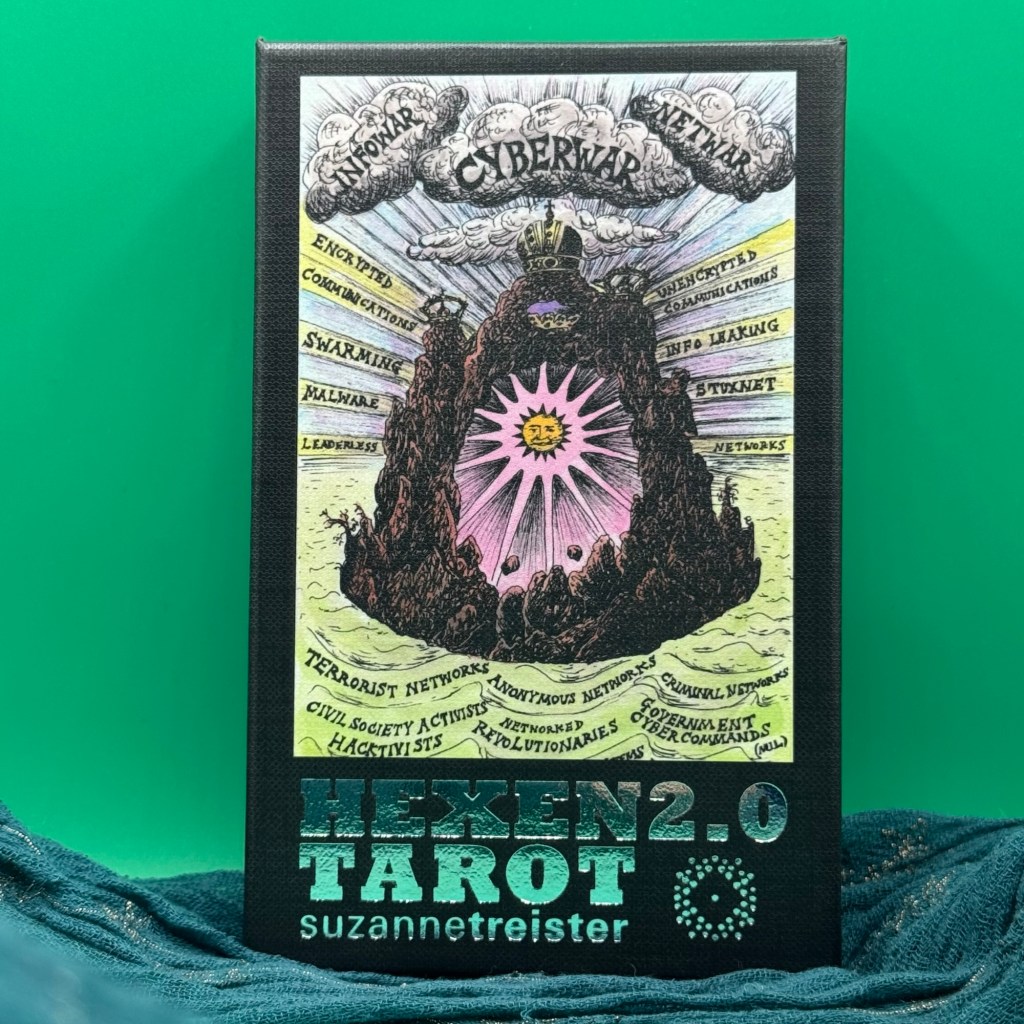
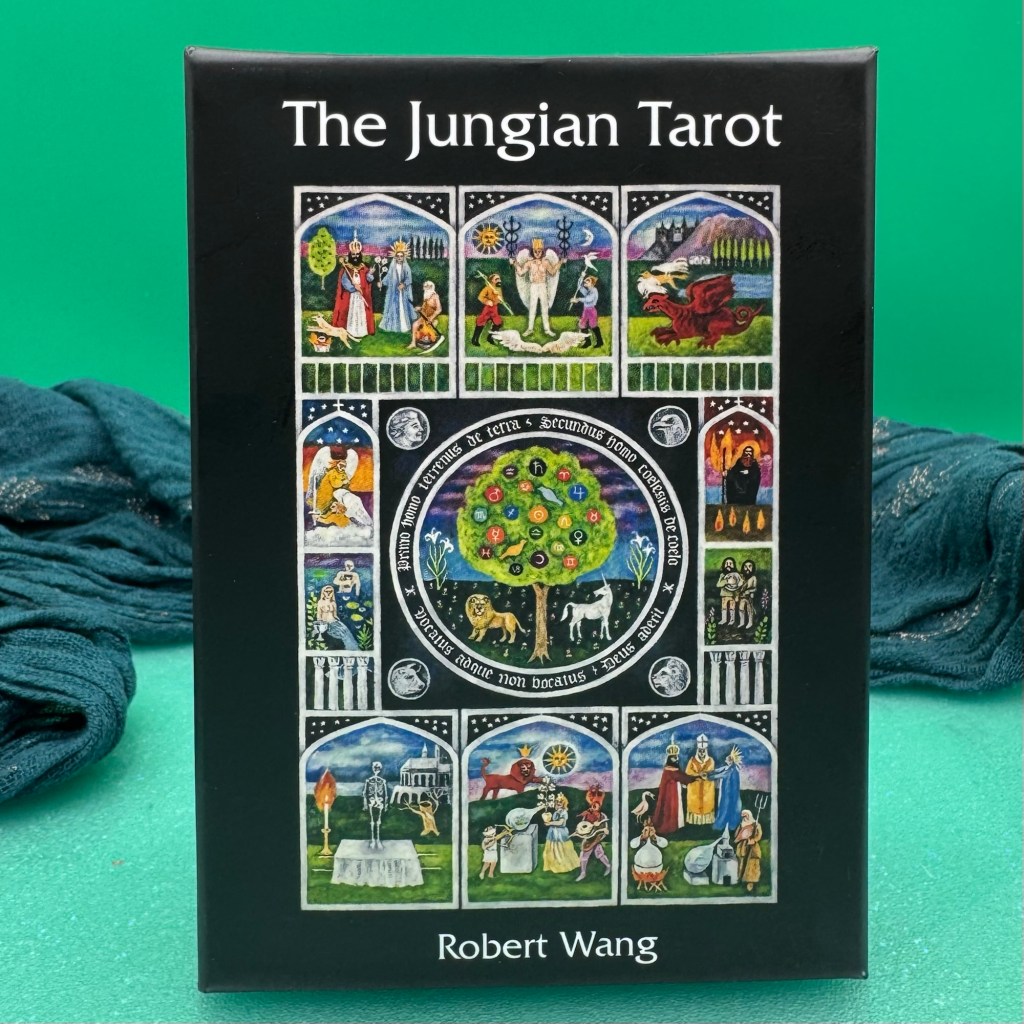
• The Jungian Tarot by Robert Wang: Here, the visual language is purely psychological. It uses the archetypal imagery of the collective unconscious to create a bridge between the Tarot and the “grammar” of our internal worlds.
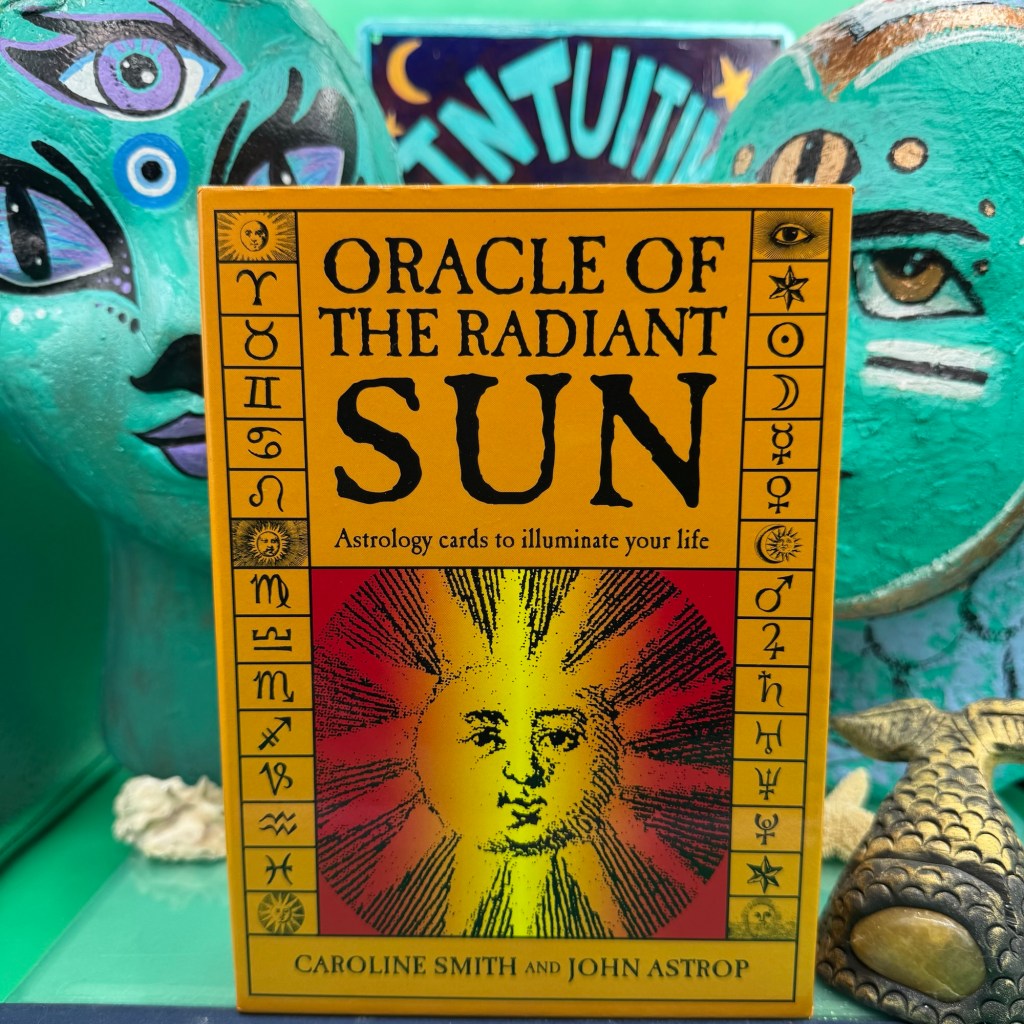
• Oracle of the Radiant Sun: This deck returns to the “Celestial Alphabet.” By using astrology as its primary syntax, it reminds me of how my Mermaid Type series seeks to find personality and flow within a fixed set of characters.
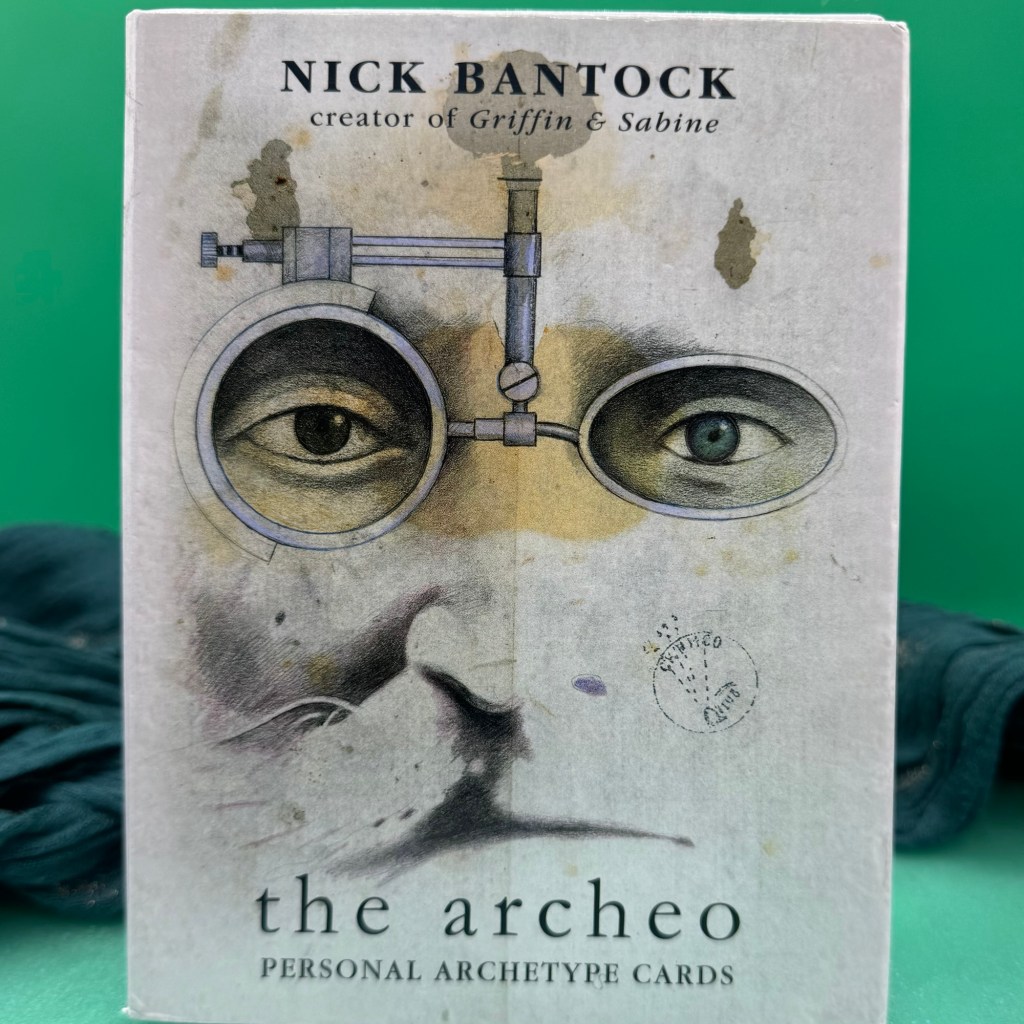
• The Archeo by Nick Bantock: From the creator of Griffin & Sabine, this deck uses a collage-based visual language. It suggests that our personal identities are “assembled” from various historical and mythological fragments—a beautiful parallel to how we assemble meaning from a spread of cards.
The Macro and the Micro
These decks suggest that whether we are looking at a line of code in Hexen 2.0 or a planetary symbol in the Radiant Sun, we are always engaged in an act of translation.
What other decks should I explore:
1. Mathematical or Geometric languages as primary reading tools?
2. Biological or Botanical systems used as a structured “alphabet”?
3. Modern Narrative systems (like film theory or literary tropes) turned into a deck?
 Deck Collecting