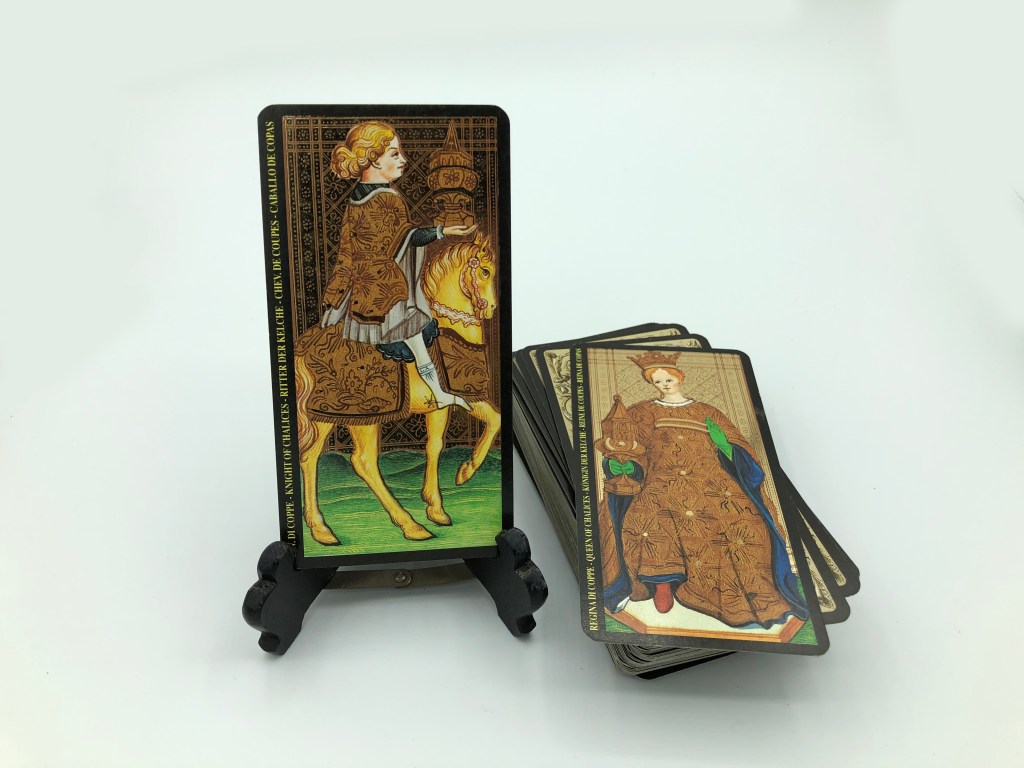
In the modern world of indie decks and AI-generated art, it’s easy to forget that the Tarot began not as a mystical secret, but as a game.
Before it was an oracle, it was Tarocchini. It was the clink of coins on a table in a 15th-century Italian court. Holding the Visconti-Sforza (the stunning Lo Scarabeo edition with the gold-foil faces) feels like holding a piece of that original noble pastime.
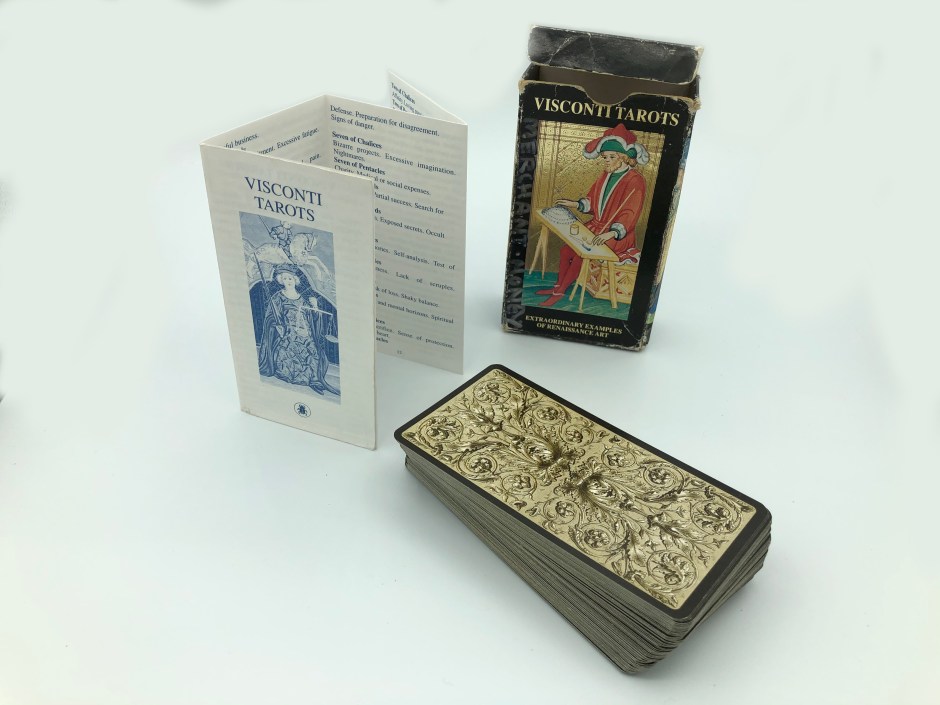
The Narrow Path of the Visconti
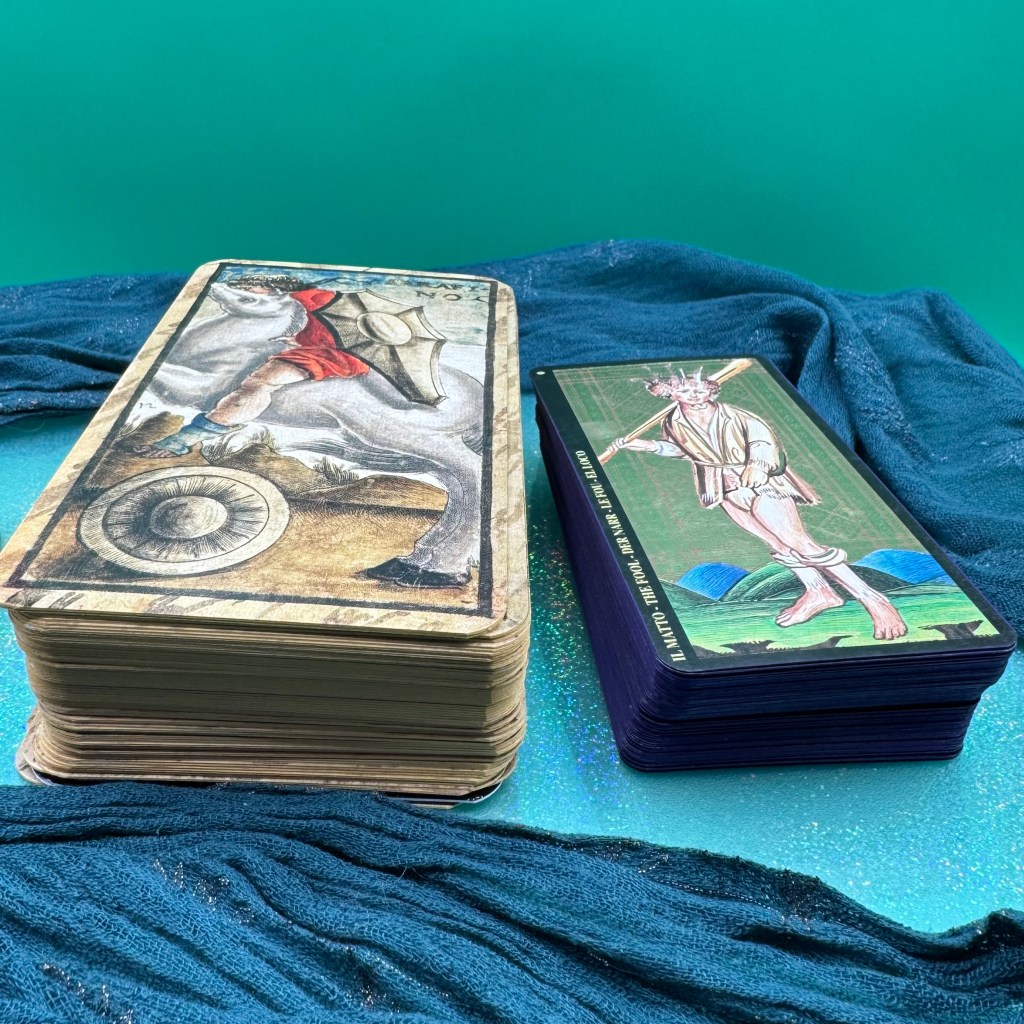
The first thing you notice about the Visconti is the silhouette. These cards are thin and narrow, designed for a different kind of hand-feel than the chunky decks we use today. There’s a fragility to them that demands respect.
As a collector, I’m obsessed with how the tech of the time is baked into the ink:
- The 1400s: Individually hand-painted masterpieces for the elite.
- The Renaissance: The democratizing power of woodblocks and the letterpress.
- The Industrial Era: The birth of the mass-produced Tarot de Marseille.
- The Modern Age: The digital and AI revolution we are currently riding.
Each deck is a “time capsule” of the technology that birthed it.
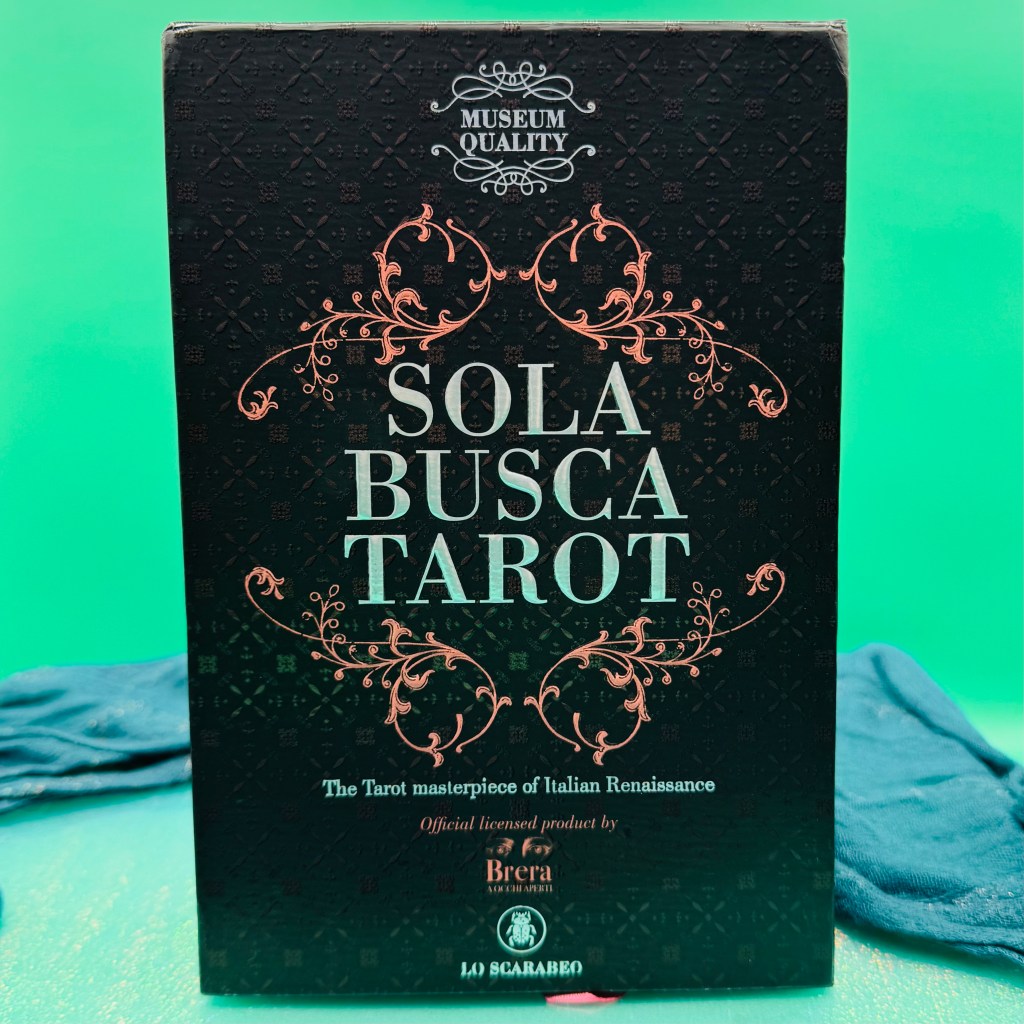
The Heavyweight: The Sola Busca
If the Visconti is a delicate silk ribbon, the Sola Busca is a marble slab.
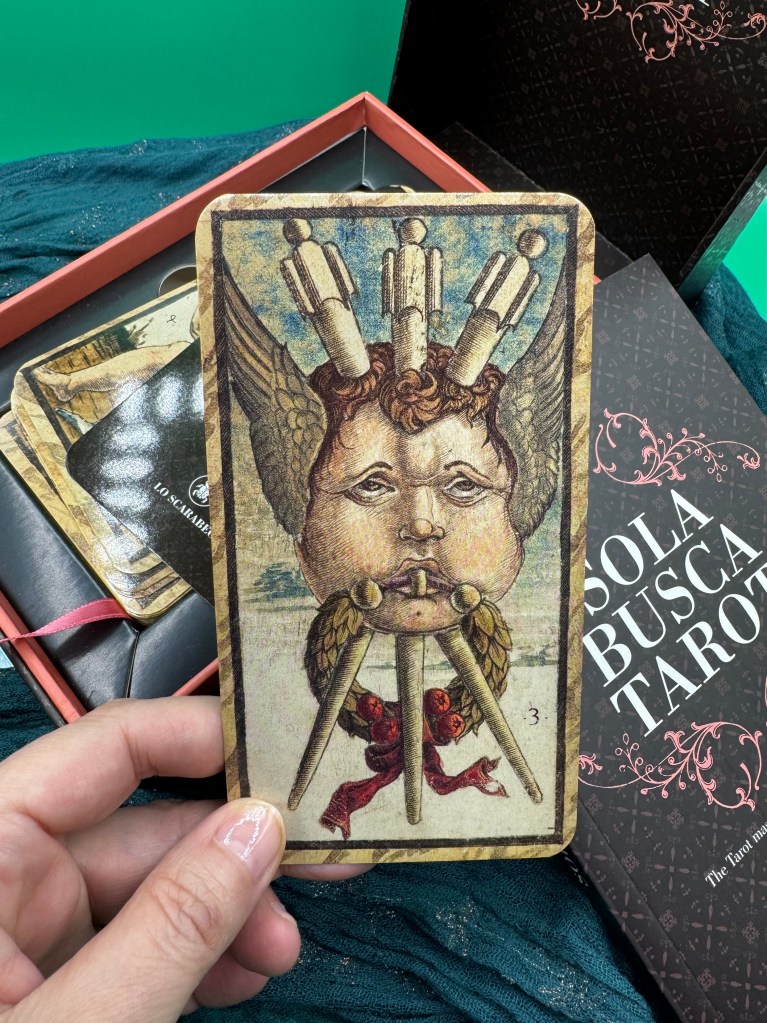
I recently added the museum-quality edition to my collection, and it is massive. It’s oversized, thick, and physically demanding to shuffle. But the challenge isn’t just physical. The Sola Busca is famously cryptic:
- The Structure: It departs from the standard “Fool’s Journey” we know.
- The Mystery: There are no words on the cards, and the guidebook often feels like it’s describing a completely different deck.
It’s a “scholar’s deck.” You don’t just read the Sola Busca; you negotiate with it. It forces you to look at the art—the transition from medieval symbols to the alchemical grit of the late 15th century—without the “crutch” of modern keywords.
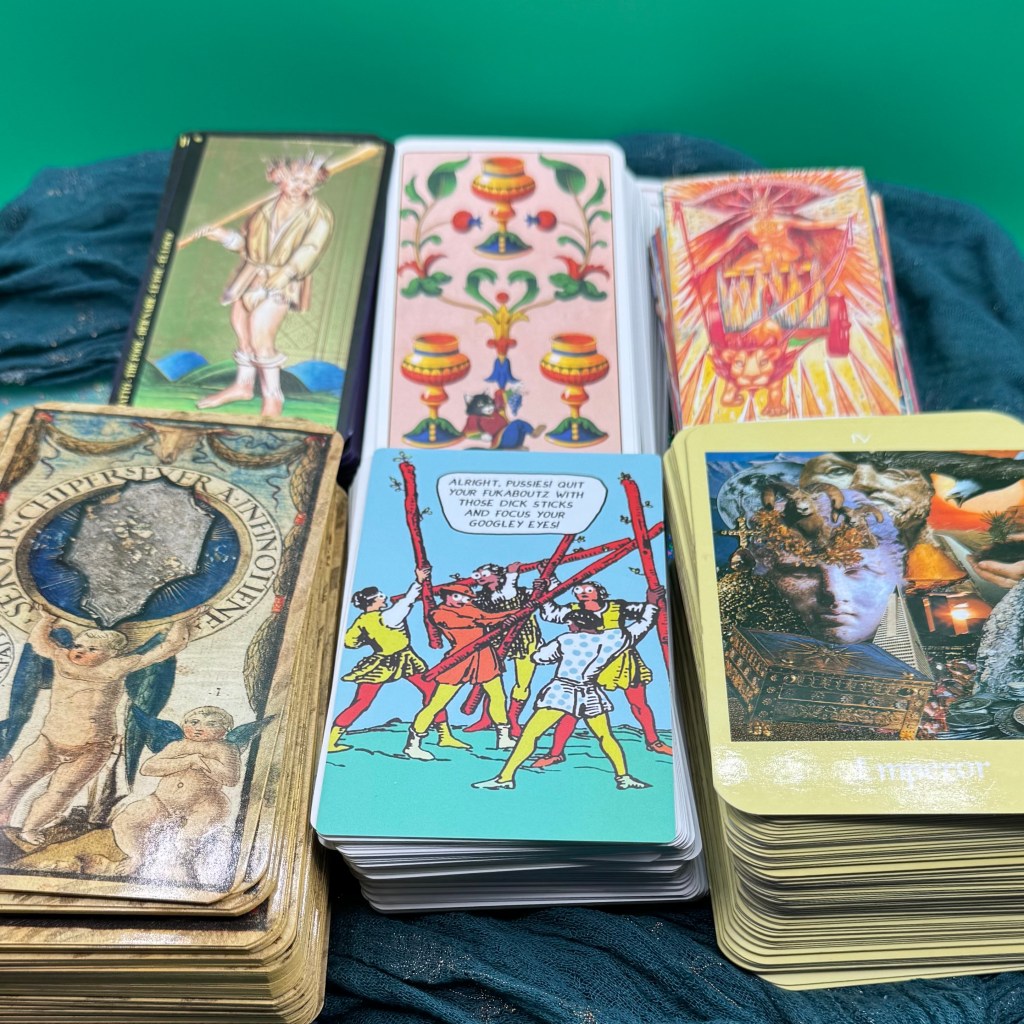
The Triple Crown: Marseille, Waite, Thoth
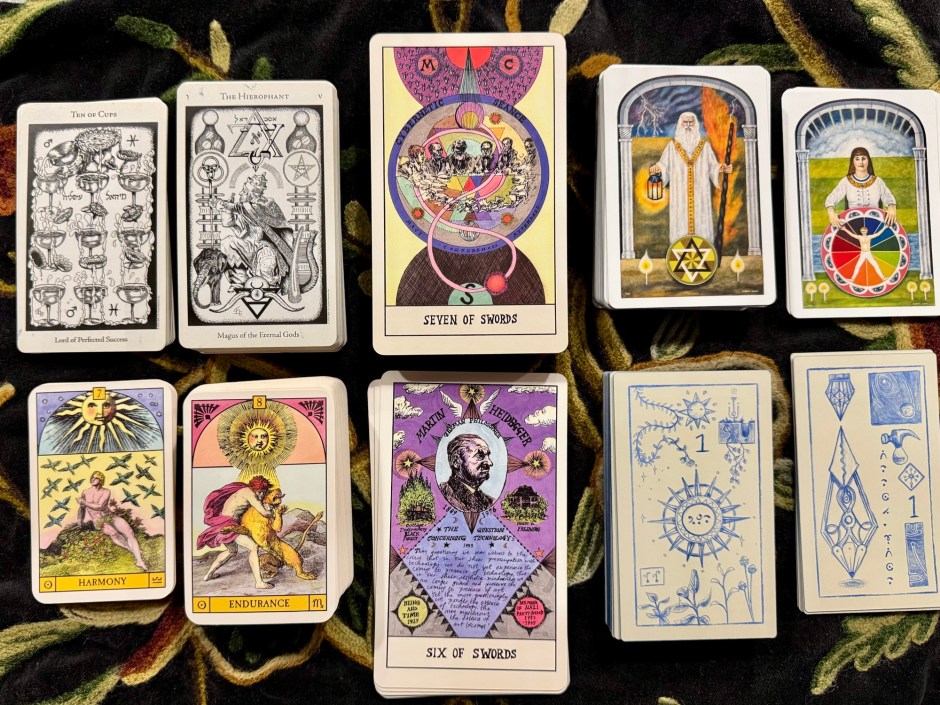
Of course, no archive is complete without the big three. While most of my collection is inspired by the Rider-Waite-Smith system (the “Common Tongue” of Tarot), I find myself reaching for unique variations of the Marseille and the Thoth when I want to shift my perspective.
Using the older cards feels… different. There is a gravity to them. When you lay out a Marseille spread, you aren’t just looking at symbols; you’re looking at the geometric ancestors of every card you’ve ever owned.
The Evolution of the Image
We’ve moved from hand-painted gold to wood-cut lines, into the lush Golden Dawn symbolism of the Thoth, and now into interactive and AI-driven decks. We are living in a moment where the “game” is evolving again.
But whether the card is a narrow strip of 15th-century gold or a 4K digital render, the heart remains the same: a human trying to make sense of the stars.
 Deck Collecting